






The SAARC Secretariat observed the Staff Day on 16 January 2013 to mark the day of its establishment.
This is the first time that the Secretariat observed the Day upon initiation by the incumbent Secretary-General of SAARC, H. E. Mr. Ahmed Saleem.
Addressing the officials of the Secretariat on the Staff Day, the Secretary-General said, “The main purpose of this initiative is to
honour the staff for their hard workand dedication and to create a conducive atmosphere in the Secretariat where everyone works
harder than before with unwavering commitment and devotion.”
On the same occasion, in pursuance of the decision of the Forty-second Session of the Programming Committee, the Secretary-General also declared Mr. Balkrishna Pariyar, Messenger, the best performer for the year 2012.
To mark the Day, the Secretariat organized a table tennis tournament participated in by the Secretary-General, its Directors and officials. Mr. Kumar Shrestha and Mr. Ratan Silwal won the final match against Mr. Tareque Muhammad and Mr. Madhusudan Lamichhane.
Likewise, in commemoration of the Day, a Staff Picnic will be held in Dhulikhel on Sunday, 20 January 2013 during which the best performer of the Secretariat and the winning team of the tournament will be awarded.
Established in 1987 in Kathmandu, the Secretariat coordinates and monitors the implementation of SAARC activities, services the meetings of the Association and initiates proposals for regional cooperation, including elaboration of sub-regional and regional projects and identification of sources of their funding.
The Secretariat comprises a Secretary-General, eight Directors and regionally and locally recruited officials from Member States, namely, Afghanistan, Bangladesh, Bhutan, India, the Maldives, Nepal, Pakistan and Sri Lanka.
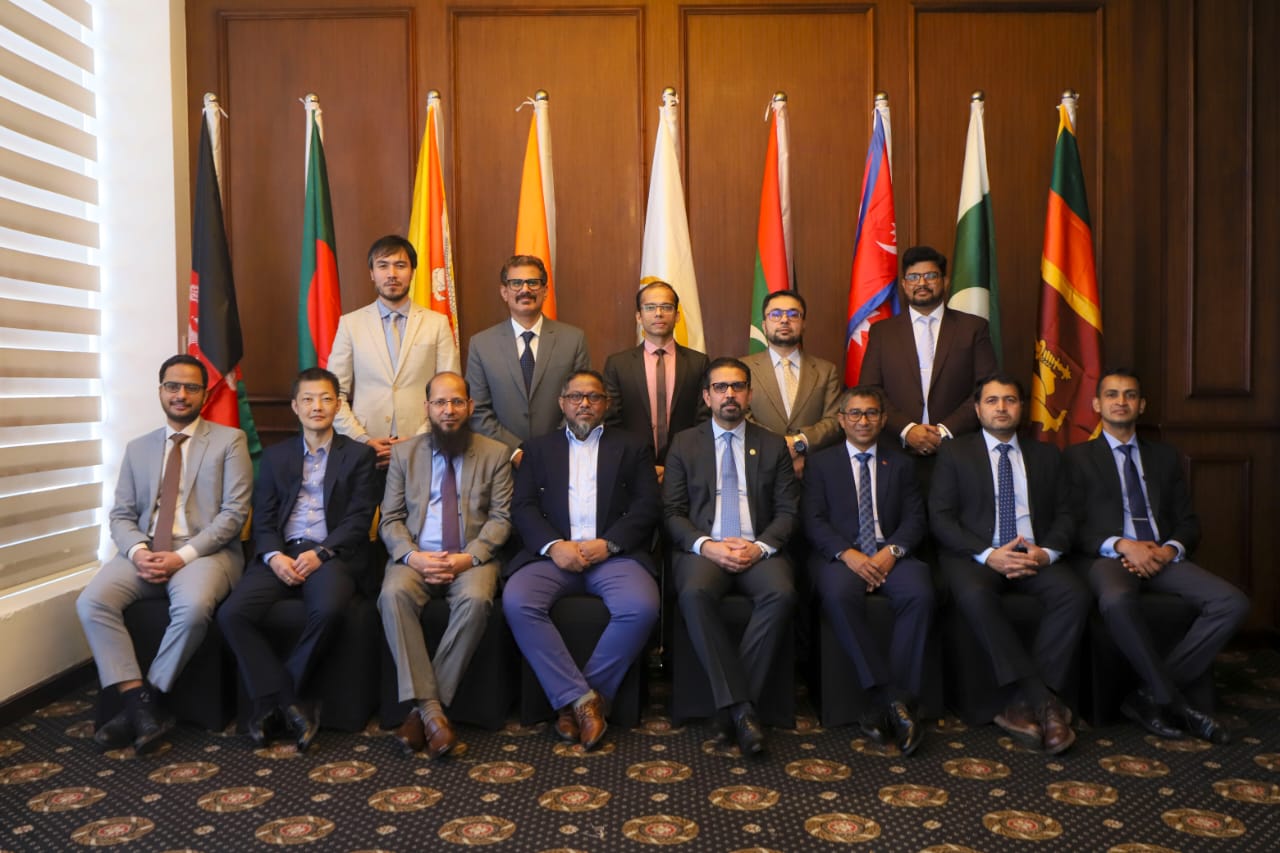
The Forty-third Session of the Programming Committee concluded at the SAARC Secretariat, Kathmandu on 5 January 2013. The meeting which was participated in by all the Member States was chaired by H. E. Mr. Hassan Shifau, Permanent Secretary of the Republic of Maldives.
Convening after a gap of over a year, the three-day session of the Committee had before it several important issues having a bearing on regional cooperation. Among other things, the Committee considered a number of Reports of the Governing Boards of SAARC Regional Centres and Expert Groups’ meetings that were held after the Seventeenth Summit. The Committee also finalized the Calendar of Activities for the year 2013.
H. E. Mr. Ahmed Saleem, Secretary-General of SAARC, also addressed the opening session of the Programming Committee. Highlighting the significant achievements of SAARC since the last Summit, the Secretary-General said, “Since the Seventeenth Summit held in Addu City, Maldives, in November 2011, SAARC has shown clear signs of closer cooperation in many fronts. Trade under the South Asian Free Trade Area (SAFTA) has already crossed the US$ 2 billion mark; the South Asian University has produced the first batch of graduates last August; the SAARC Visa Exemption Scheme now covers 24 categories of persons who are entitled to visa free travel within the region.”
The Programming Committee comprises the Heads of SAARC Divisions of the Ministries of Foreign/External Affairs of the Member States of SAARC. It is a subsidiary body that reports to the Standing Committee of Foreign Secretaries.
In addition to the Directors from the SAARC Secretariat, the Directors of all the Regional Centres also attended the Committee’s Session that was held at the Secretariat from 3 to 5 January 2013.
An interactive session with Nobel Laureate Prof. Muhammad Yunus titled “Microfinance and Poverty Reduction in South Asia” was held at the SAARC Secretariat on Saturday, 22 December 2010.
H.E. Mr. Ahmed Saleem, Secretary-General of SAARC welcomed Nobel Laureate Prof. Muhammad Yunus and all distinguished delegates to the programme and said that as SAARC is observing its Poverty Alleviation Decade 2006 – 2015: SAARC looks forward to learning from the insights and experiences of Prof. Yunus on a subject which is extremely relevant in the context of the South Asia.
The interactive session was chaired by Hon. Dependra Bahdur Kshetry, Vice-Chairman of the National Planning Commission of Nepal. The discussion panelists were Dr. Yuba Raj Khatiwada - Governor of Nepal Rastra Bank, Mr. Binod Chaudhary - President Confederation of Nepalese Industries (CNI), Ms. Chandani Joshi, Former Director of UNIFEM South Asia and Mr. Raj Babu Shrestha, Executive Director – Poverty Alleviation Fund, Nepal.
Prof. Yunus delivering an inspiring speech, pointed out that the South Asian region being home to one fourth of world’s population, is also a hub of poverty in the world. He emphasized the role of women and youth in poverty reduction processes and the need for redesigning economic, political, educational, financial and technological systems to reduce poverty until poverty is eradicated from the region.
A number of distinguished invitees including diplomats, academics, media personnel and Officials of the SAARC Secretariat participated in the programme for which SAARC Secretariat was supported by CNI and SACEPS.
Mr. Dhan Bahadur Oli – Director (Information and Poverty Alleviation Division) of SAARC Secretariat proposed a vote of thanks and expressed SAARC’s gratitude to Nobel Laureate Prof. Muhammad Yunus, Chair, all panelists and distinguished invitees for making the event a success.
H. E. Mr. Ahmed Saleem, Secretary-General of SAARC, addressed the Third Meeting of the Inter-Governmental Expert Group on Climate Change convened at the SAARC Secretariat today.
The two-day meeting brings together experts from SAARC Member States and Regional Centres including the South Asian University to take stock of the progress made so far in the implementation of the Thimphu Statement on Climate Change adopted at the Sixteenth SAARC Summit held in Bhutan in April 2010. The meeting is also expected to suggest further ways and means to effectively put into action the recommendations contained in the Statement.
In his address, the Secretary-General stated that South Asia, as a region, is one of the most ecologically vulnerable regions of the world and continues to face daunting challenges related to adverse effects of climate change. Given that, he highlighted the need to strengthen cooperation in order to preserve, protect and manage the region’s diverse and fragile eco-systems for the well-being of its people. He added, “SAARC, in its history of over two and half decades, has launched many initiatives and activities, and made significant progress. However, let us not relax in the comfort of our achievements. We must continue to move ahead and seize the opportunities to build on the progress so far.”
The Thimphu Statement on Climate Change adopted by the SAARC Heads of State or Government is a clear indication of their commitment and determination to enhance cooperation among Member States in this important area. The Statement outlines a number of initiatives to be implemented both at the national and regional level to address the adverse effects of climate change.