






Kathmandu, Nepal
Date: 12 August 2025
“Sustainable Family Farming in Livestock Sector for Attaining UNDFF and the SDGs in South Asia” held in Kathmandu, Nepal
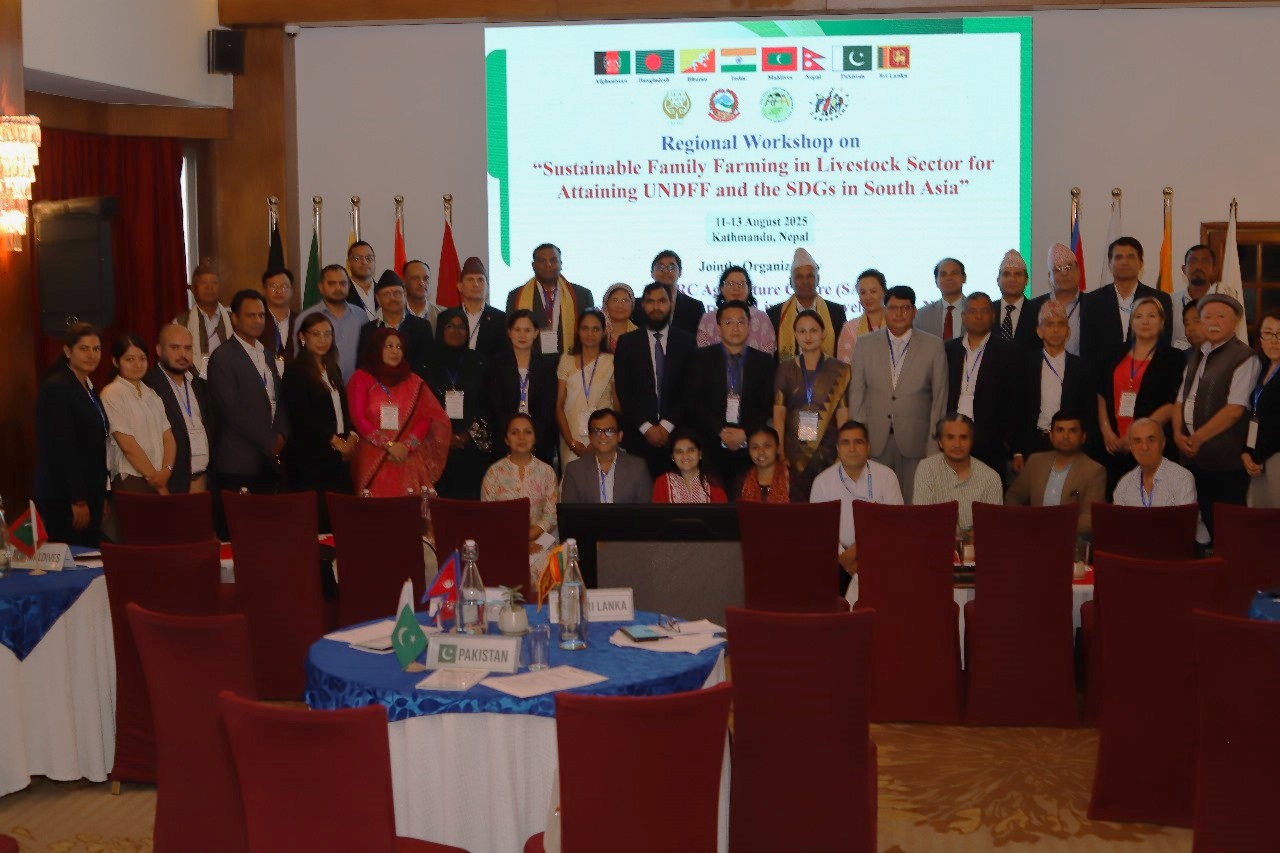
The inaugural session of the SAARC regional workshop titled “Sustainable Family Farming in Livestock Sector for Attaining United Nations Decade Family Farming (UNDFF) and the SDGs in South Asia” was held on 11th August, 2025 in Kathmandu, Nepal. The three- day workshop has been jointly organized by the SAARC Agriculture Centre (SAC) in collaboration with the Ministry of Agriculture and Livestock Development, Nepal, Asian Farmers Association (AFA), Philippines and Heifer International, Nepal. The workshop aims to formulate the strategies and action plan for strengthening family farming in livestock and pastoralism.
The meeting was attended by the delegates of Six SAARC Member States, namely Bangladesh, Bhutan, Maldives, Nepal, Pakistan and Sri Lanka. Farmer Organization representatives from India, Mongolia, Tajikistan and Kyrgyzstan also joined in the program. In addition, national and international speakers, panellists, animal science experts, professionals and academia attended the program. Dr. Govinda Prasad Sharma, Secretary (Agriculture Development), Ministry of Agriculture and Livestock Development, Nepal graced the occasion as the “Chief Guest”. Mr. Tanvir Ahmad Torophder, Director (ARD and SDF), SAARC Secretariat, Kathmandu, Nepal and Dr. Ram Nandan Tiwari, Director General, Department of Livestock Services, Nepal joined the program as a guest of honor. The Programme was coordinated and executed by Dr. Md. Younus Ali, Senior Programme Specialist (Livestock), SAARC Agriculture Centre, Dhaka. Around 65 participants attended the event from different SAARC Member Countries. The workshop is expected to conclude with a set of policy recommendations and action plans aimed at accelerating the sustainable family farming in livestock.
Joint Media Release – Embargoed until 2 PM Sri Lankan Time, Tuesday 05 August 2025
SDF and Partners Launch The Regional AquaLivelihood Project to Empower
Small-Scale Fish Farmers and Bolster Nutrition Security in South Asia
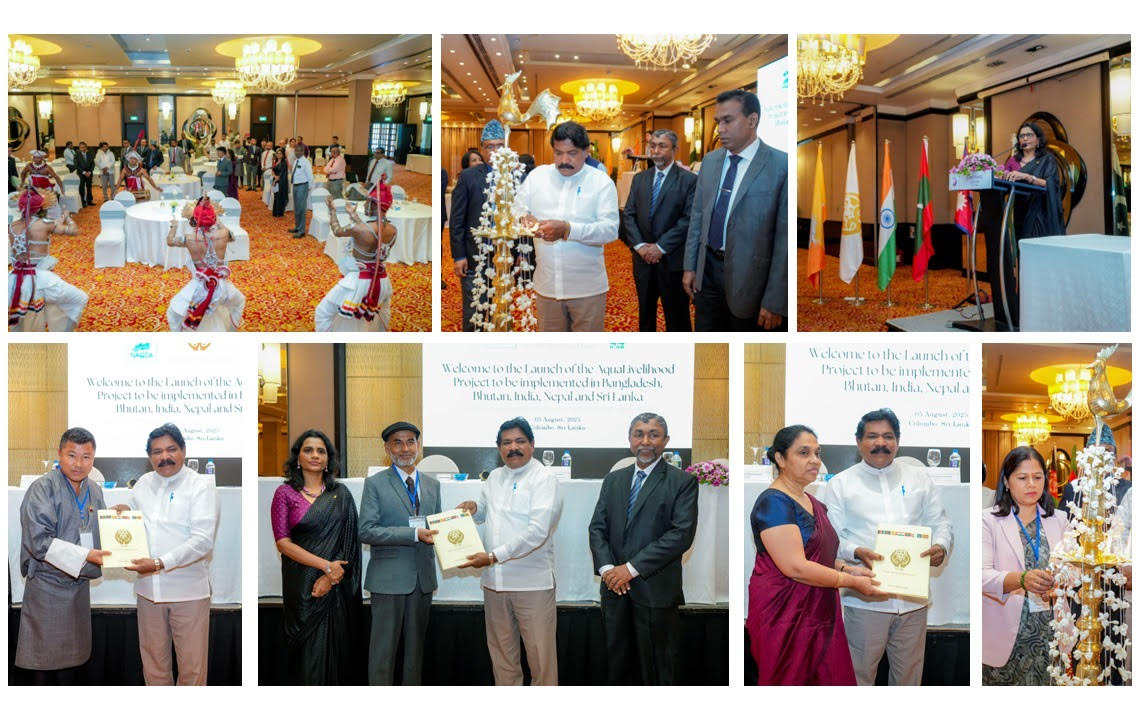
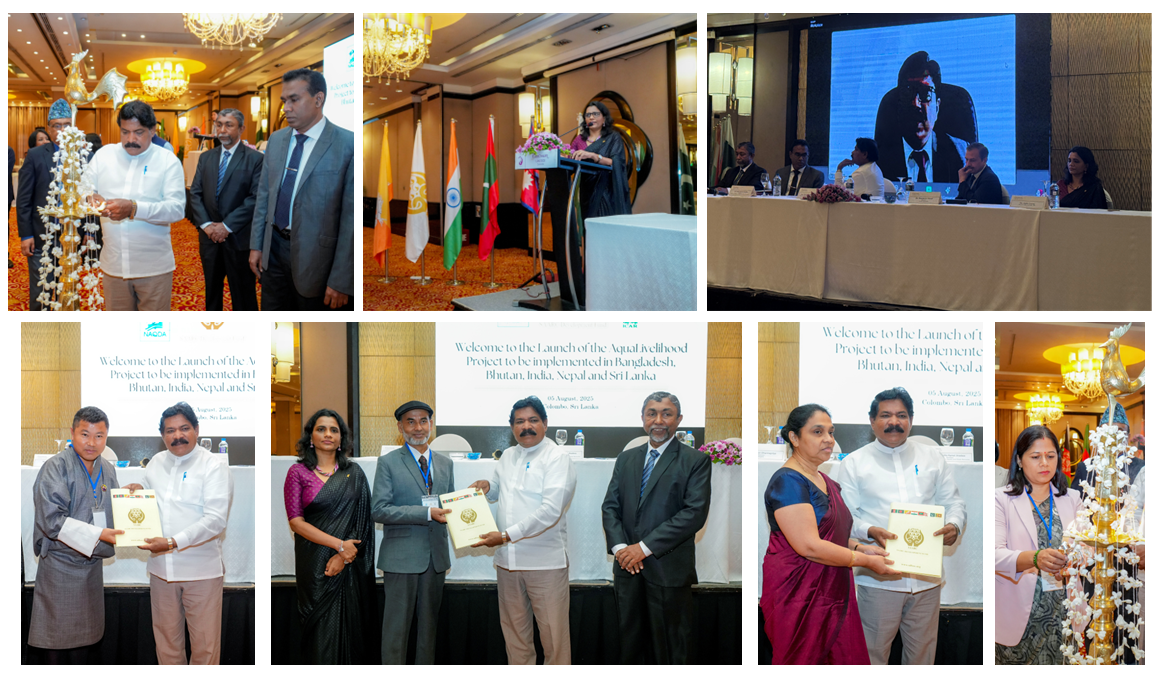
Colombo, Sri Lanka | 5 August 2025 – The SAARC Development Fund (SDF), in partnership with leading national institutions and technical government agencies of the five SAARC member countries, officially launched the AquaLivelihood Project in Colombo, Sri Lanka.
Graced by the Hon’ble Minister of Fisheries of Sri Lanka, Ramalingam Chandrasekar, as the Chief Guest, the launch marks a pivotal regional effort to uplift smallholder fish farmers and improve nutrition security across the region.
The three-year regional initiative represents a total investment of USD 3.97 million, including a USD 3.23 million grant from SDF and USD 739,109 in in-kind co-financing. The project will directly benefit over 120,000 rural households, 30% of whom are women, across Bangladesh, Bhutan, India, Nepal and Sri Lanka.
Titled “Livelihood Enhancement of Small-Scale Fish Farmers and Nutrition Security of Rural Masses in the SAARC Region through Aquaculture Development”, the project - known as AquaLivelihood - is spearheaded by Indian Council for Agricultural Research-Central Institute of Freshwater Aquaculture (ICAR-CIFA), in close collaboration with government agencies from each participating country: Department of Fisheries in Bangladesh, National Research and Development Centre for Aquaculture in Bhutan, Indian Council of Agricultural Research, India, Central Fisheries Promotion and Conservation Center in Nepal and the National Aquaculture Development Authority of Sri Lanka.
AquaLivelihood responds to two critical regional priorities: Strengthening the livelihoods of small-scale aquaculture farmers and addressing malnutrition through sustainable fish production systems.
The project will be implemented through three strategic components:
At the launch, Hon’ble Minister Ramalingam Chandrasekar underscored the critical role of the AquaLivelihood initiative in transforming the aquaculture sector and bolstering regional food and nutrition security. He stated that AquaLivelihood is not merely a project, but a timely and transformative journey toward a more resilient future for small-scale farmers. “As our nations emerge from the shadows of the pandemic and ongoing economic challenges, this initiative serves as a unifying force by bringing together Member States, governments, researchers, and communities to uplift livelihoods, enhance nutrition and drive collective progress,” the Minister said.
Echoing this sentiment, Irosha Cooray, Officer-in-Charge of SDF, said: “This project exemplifies the power of regional collaboration in addressing shared challenges. By empowering small-scale fish farmers, particularly women, and fostering knowledge exchange, AquaLivelihood strengthens the foundations of food security, sustainable development and regional solidarity in our region.” She said that the initiative is fully aligned with the SAARC Charter, SAARC Social Charter, and SDF’s mission to promote poverty alleviation, women empowerment and regional integration.
With its strong emphasis on scientific innovation, inclusive development and policy synergy, AquaLivelihood is set to become a flagship regional initiative driving equitable growth, resilient food systems, and long-term prosperity across the region.
Fish remains a key protein source in South Asia, sharing over 60% of animal protein supply in countries like Bangladesh, Sri Lanka and Nepal. Aquaculture has shown significant growth in the region with 11% in Nepal, 5.4% in Bangladesh, and 6-8% in India over the past decade. The fisheries sector is also a major economic driver, contributing 24% of agricultural GDP in Bangladesh and supporting the livelihoods of millions.
The Deputy Director General (Fisheries Science) of ICAR said that “As the lead country, India is proud to partner with Bangladesh, Nepal, Bhutan and Sri Lanka in this SDF-supported initiative aimed at strengthening livelihoods and nutrition through sustainable aquaculture. This project reflects our shared commitment to regional cooperation, policy alignment, and inclusive growth in the fisheries sector across South Asia.”
Dr. Shiba Shankar Giri, Project Coordinator and Head of the Fish Nutrition & Physiology Division at ICAR-CIFA, reflected on the project’s origins: “The policy dialogues and nine policy briefs we developed during the COVID-19 pandemic laid the groundwork for what has now become the AquaLivelihood Project. Seeing this vision realized is deeply rewarding. It is a collective regional commitment to transforming rural aquaculture into a vehicle for sustainable livelihoods and nutrition.”
The Director General of the National Aquaculture Development Authority of Sri Lanka (NAQDA) Dr. J. M. Asoka said that the AquaLivelihood Project represents a timely and strategic intervention for the South Asian region. By focusing on small-scale aquaculture, it not only enhances income opportunities for rural communities but also supports national and regional goals for food and nutrition security. “For Sri Lanka, this project complements our vision and strengthens our collaboration with neighboring countries to build a more resilient and inclusive aquaculture sector,” she said.
The AquaLivelihood Project will be implemented in selected locations across five SAARC Member States: Bangladesh (Mymensingh, Narsingdi, Bogura, Bagerhat, Satkhira), Bhutan (Lhamoizhingkha, Chekiling and selected areas in Sarpang, Samdrup Jongkhar and Pemagatsel districts), India (Odisha, West Bengal, Punjab, Karnataka, Chhattisgarh, Tamil Nadu), Nepal (Janakpur, Bhairahwa, Chitwan, Morang, Jhapa, Sunsari), and Sri Lanka (North Central and North Western Provinces).
The launch of this regional project will be followed by a two-day inception workshop with implementing partners from Bangladesh, Bhutan, India, Nepal and Sri Lanka to establish a shared understanding of project goals, align implementation strategies, and ensure a coordinated and impactful rollout across the region.
About SAARC Development Fund: The SAARC Development Fund is the umbrella financial institution of SAARC, mandated to fund projects in social, economic and infrastructure sectors. SDF has funded over 100 projects in 17 thematic areas across all SAARC Member States.
About ICAR: The Indian Council of Agricultural Research (ICAR) is the apex body for agricultural research, education, and extension in India under the Ministry of Agriculture and Farmers Welfare. It is the world’s largest National Agricultural Research and Education System (NARES) that includes 113 research institutes, 75 agricultural universities, and over 700 Krishi Vigyan Kendras (KVKs) across India, to support farmers and boost rural development.
For Media Inquiries, please contact:
SAARC Development Fund Secretariat
Email: This email address is being protected from spambots. You need JavaScript enabled to view it. | Website: www.sdfsec.org

The inaugural session of the SAARC regional workshop on “Promoting Agroecological Approaches for Sustainable Transformation of Agri-food Systems in South Asia” was held on 29th July, 2025 in Thimphu, Bhutan. The three days workshop was organized by the SAARC Agriculture Centre, Dhaka in collaboration with the Ministry of Agriculture and Livestock, Bhutan and Welthungerhilfe. The objectives of the workshop were to assess the current status of agroecological policies, programs, and practices across the region, and to develop actionable policy recommendations to scale up the adoption of agroecology in SAARC member countries.
The meeting was attended by the participants of five SAARC Member Countries, namely Bangladesh, Bhutan, Maldives, Nepal and Sri Lanka. In addition to national and international speakers, panellists, agricultural experts, professionals and academia joined the program. Mr. Thinley Namgyel, Secretary, Ministry of Agriculture and Livestock, Bhutan graced the occasion as the “Chief Guest”. Mr. Tanvir Ahmad Torophder, Director (ARD and SDF), SAARC Secretariat, Kathmandu, Nepal and Mr. Yonten Gyamtsho, Director, Department of Agriculture, Bhutan joined the program as guests of honor. Dr. Md. Harunur Rashid, Director, SAARC Agriculture Centre chaired the inaugural session. Around 65 participants attended the event from different SAARC Member Countries.

Without urgent action, 18 million more women and girls in South Asia could suffer from anaemia by 2030
SAARC, UNICEF and WHO urge governments to take urgent and unified action in South Asia, the region with the highest burden of anaemia among girls and women globally.
KATHMANDU/COLOMBO, 9 July 2025: Anaemia remains one of South Asia’s most persistent health and equity challenges, affecting nearly half of all adolescent girls and women in the region. Now, experts warn that without concerted action, 18 million more girls and women could become anaemic by 2030, adding to the current burden of 259 million.
In response, for the first time, governments from seven South Asian countries have come together to take collective action against anaemia. From 9-11 July, the South Asian Association for Regional Cooperation (SAARC), the Government of Sri Lanka, UNICEF, WHO, and other partners are hosting the Nourishing South Asia | Reducing Anaemia in Adolescent Girls and Women regional conference in Colombo, Sri Lanka. The event brings together over 100 policymakers, researchers, health experts, and development leaders to shape a shared regional framework and country action plans to address this widespread yet overlooked health crisis. The conference will also launch a new South Asia Anaemia Academic Alliance, aimed at rallying scientific leadership and closing research gaps to drive long-term solutions.
“Anaemia remains a public health concern in Sri Lanka, affecting 18.5 per cent of women of reproductive age and 14.6 per cent of children under five. We are stepping up our nutrition programme, particularly in districts with high rates of anaemia, focusing on women and children. The government is committed to expanding these efforts nationwide through collaborative actions across multiple sectors. We are eager to strengthen our partnership with UNICEF, WHO, and other UN agencies. Organising this conference highlights our position as a regional leader in tackling anaemia,” said Dr Harini Amarasuriya, Honourable Prime Minister of Sri Lanka.
Anaemia occurs when the body lacks sufficient healthy red blood cells to carry oxygen, resulting in people feeling weak, tired, and more susceptible to illness. For girls and women, anaemia can make it more challenging to stay in school, work or care for their families, particularly due to heavy periods. Lastly, anaemia during pregnancy poses a risk to both mother and baby.
However, anaemia isn’t just a health problem. It’s a warning sign of deeper issues, such as poor nutrition, infections, and inequality. The poorest, particularly women and children, are most affected, exacerbating the existing crisis of poor health, malnutrition, lost opportunities, and gender inequality.
“In South Asia, our young people and mothers stand at the heart of our demographic and development goals. Ensuring that they are healthy, nourished and empowered is not just a moral imperative, it is a strategic investment in the future of our societies.” said His Excellency, Mr. Md. Md. Golam Sarwar, Secretary General of SAARC.
Although many countries have national policies in place to tackle anaemia, their health systems still face significant challenges that hinder progress. These include inadequate healthcare infrastructure to deliver services, difficulties for healthcare workers in reaching isolated communities, and limited programme scopes that fail to meet the needs of all women and girls, particularly those in the poorest and most marginalised areas. Furthermore, there is a lack of comprehensive data collection to inform effective interventions.
“This is a clarion call for action. When half of all adolescent girls and women in South Asia are anaemic, it’s not only a health issue, but also a signal that systems are failing them. We know what to do and we know how to do it. Now is the time for governments to take the lead and scale up solutions,” said Mr. Sanjay Wijesekera, Regional Director of UNICEF South Asia.
Anaemia doesn’t just affect women and girls. It is a major cause of low birth weight, with South Asia accounting for 40 per cent of the global cases of babies born with low birth weight. Anaemia hampers children’s ability to get enough oxygen, affecting their growth and development. This can lead to fatigue, delayed learning, and increased susceptibility to illness.
“Anaemia is both preventable and treatable. We know the causes: poor nutrition, iron deficiency, infections, chronic diseases, and pregnancy-related complications. A more nuanced and evidence-driven approach is needed. Tackling anaemia is not just about health; it is foundational to the well-being of our women and girls. It is as much an economic and social investment as a health investment,” said Saima Wazed, Regional Director of WHO South-East Asia.
The overall number of anaemia cases has remained largely unchanged for the last two decades. However, progress is possible, as Nepal is demonstrating. By investing in frontline workers who can travel to remote communities, prioritising an equity approach, integrating programmes such as health and nutrition and implementing a multi-sectoral nutrition plan, Nepal has consistently achieved significant results over the past decade.
The prevalence of anaemia in women of reproductive age in Nepal has declined equitably by 7 per cent (41per cent in 2016 to 34 per cent in 2022), with a similar impact even in women belonging to the poorest households. WHO projections forecast that by 2030, anaemic women in Nepal will decline to 27 per cent. The projections estimate that the drop will be the most significant in Nepal’s Karnali province (11 per cent), and the anaemia prevalence will be lowest among women from the poorest households (19 per cent).
India and Pakistan are also seeing promising local results where empowered health workers and data-driven programmes are in place. Bangladesh is linking adolescent nutrition to schools and social services through new integrated platforms. In Sri Lanka, progress is also commendable, with a prevalence rate of 17 per cent among women under 25 years of age as of 2022.
Anaemia is not just a health crisis. It is a marker of inequality. It stifles potential, productivity and entire economies, costing the South Asia region $32.5 billion each year. Yet, the return on investment is undeniable: every $1 invested in maternal anaemia interventions yields an economic return of $9.50.
Ending anaemia takes leadership, but also teamwork. Governments must lead, but communities, health workers, schools, and families all have a role to play. With robust health systems, trained health workers, more innovative use of data, and more inclusive and coordinated action across sectors, girls and women can better fulfil their potential and contribute to stronger communities and more prosperous nations.
###
Multimedia:
Media Inquiries
About SAARC
The South Asian Association for Regional Cooperation (SAARC) was established with the signing of the SAARC Charter in Dhaka on 8 December 1985. SAARC comprises of eight Member States: Afghanistan, Bangladesh, Bhutan, India, Maldives, Nepal, Pakistan, and Sri Lanka. The Secretariat of the Association was established in Kathmandu on 17 January 1987. The objectives of the Association, as outlined in the SAARC Charter, are to promote the welfare of the peoples of South Asia and improve their quality of life; to accelerate economic growth, social progress, and cultural development in the region; to provide all individuals with the opportunity to live with dignity and reach their full potential; to promote and strengthen collective self-reliance among South Asian countries; to foster mutual trust, understanding, and appreciation of each other's problems; to encourage active collaboration and mutual assistance in economic, social, cultural, technical, and scientific fields; to strengthen cooperation with other developing countries; to enhance cooperation among themselves in international forums on matters of common interest; and to collaborate with international and regional organisations with similar aims and objectives.
About UNICEF
UNICEF works in some of the world’s toughest places, to reach the world’s most disadvantaged children. Across more than 190 countries and territories, we work for every child, everywhere, to build a better world for everyone.
UNICEF’s Regional Office for South Asia (ROSA) works with UNICEF Country Offices in Afghanistan, Bangladesh, Bhutan, India, the Maldives, Nepal, Pakistan and Sri Lanka to help to save children’s lives, defend their rights, and help them fulfil their potential. For more information about UNICEF’s work for children in South Asia, visit www.unicef.org/rosa and follow UNICEF ROSA on Instagram, Twitter and Facebook.
About WHO
Dedicated to the well-being of all people and guided by science, the World Health Organization leads and champions global efforts to give everyone, everywhere an equal chance to live a healthy life. Working with 194 Member States across six regions and on the ground in 150+ locations, the WHO team works to improve everyone’s ability to enjoy good health and well-being.